Why OBSDN matters in 2026
The post-bull cycle of 2026 demands infrastructure that prioritizes data sovereignty over convenience. For crypto professionals, the ability to own and control research data is no longer a feature—it is a risk mitigation strategy. OBSDN addresses this by combining local-first note-taking with decentralized synchronization, creating a resilient layer for market research that avoids single-point failures.
Unlike traditional cloud-based research tools, OBSDN keeps your intellectual property on your device. This architecture ensures that sensitive market insights, trading strategies, and deep-dive analysis remain under your control, immune to platform outages, censorship, or arbitrary account suspensions. The decentralized sync mechanism allows for seamless collaboration without sacrificing the security of the primary data source.
This shift is critical as the industry matures. As regulatory scrutiny increases and platform stability becomes a variable, relying on centralized databases for critical financial intelligence introduces unnecessary vulnerability. OBSDN provides a robust alternative, ensuring that your research infrastructure is as decentralized and resilient as the assets you analyze.
Local-first data and decentralized sync
High-stakes financial operations cannot afford downtime. Local-first architecture solves this by treating the user’s device as the source of truth. Instead of waiting for a central server to approve every action, transactions are processed locally and synced later. This ensures that critical data remains available even when network connections fail or central infrastructure goes offline.
The technical advantage lies in conflict resolution and privacy. By keeping sensitive financial records on local storage, exposure to centralized breach vectors is minimized. OBSDN handles synchronization in the background, resolving conflicts using deterministic algorithms that preserve data integrity without exposing raw details to intermediate nodes. This model mirrors how a distributed ledger works, but at the application layer, giving users immediate control over their state.
For traders and institutions, this means resilience. If a cloud provider experiences an outage, local-first clients continue to operate, queueing updates until connectivity is restored. This reduces latency and prevents the cascading failures that often plague traditional Web2 financial platforms. The result is a system that is not just decentralized, but inherently available.
Graph analysis for relationship mapping
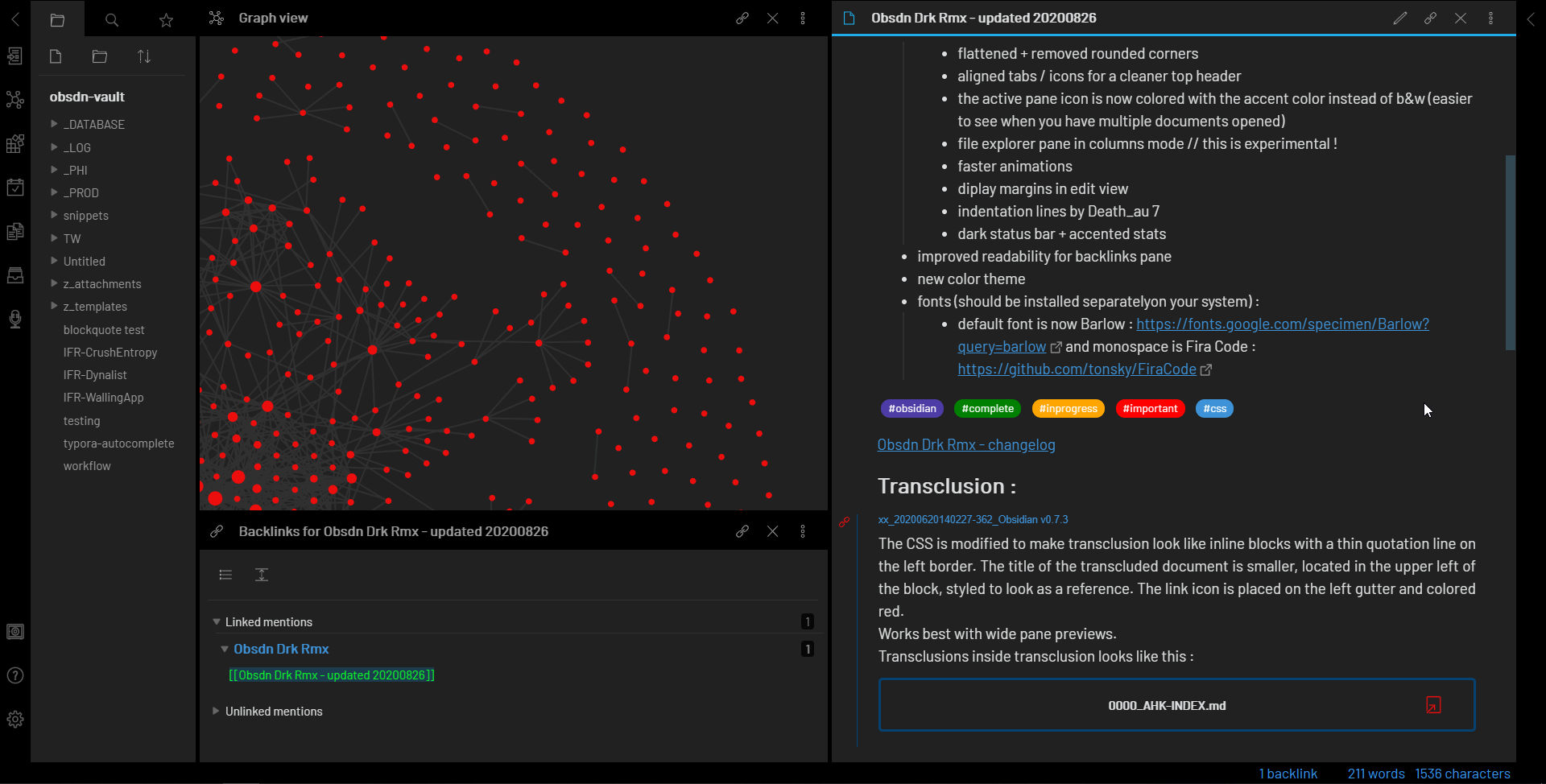
Raw market data often looks like a tangled knot of wires. Graph analysis plugins untangle this mess by visualizing connections between tokens, protocols, and market movements. Instead of staring at static spreadsheets, you see the actual infrastructure of the market. This turns abstract data into strategic insights, revealing which assets move together and which ones stand alone.
The core value lies in the algorithms. Tools like the Graph Analysis plugin for Obsidian offer six distinct methods to find similar notes or tokens. These include Co-citations, Adamic Adar, Jaccard, Overlap, Bag of Words, and Otuska Chiai. Each algorithm highlights a different type of relationship. For example, Co-citations show how often two assets appear in the same context, while Jaccard measures the overlap in their shared attributes.
Choosing the right algorithm depends on what you are looking for. If you want to spot emerging trends, look for nodes that are suddenly gaining connections. If you are assessing risk, focus on highly centralized clusters where a failure in one node could cascade to others. This visual approach helps you identify hidden dependencies that traditional linear analysis might miss.

The goal is not just to see the network, but to understand its structure. By mapping these relationships, you can anticipate market shifts before they hit the price charts. This is not about guessing; it is about reading the underlying connectivity of the Web3 ecosystem.
Market research signals for adoption
The shift toward OBSDN-style infrastructure is not driven by hype, but by measurable changes in how professional analysts consume and verify data. As crypto markets mature, the tolerance for opaque data pipelines drops. Traders and institutional researchers are demanding infrastructure that offers transparency and integrity comparable to traditional financial markets. This demand is creating a clear adoption curve for tools that prioritize verifiable data sources over aggregated, unverified feeds.
One of the strongest indicators of this shift is the growing preference for on-chain data verification. Analysts are increasingly cross-referencing exchange data with on-chain metrics to detect anomalies before they impact price. This behavior suggests a market that is moving away from passive price tracking toward active infrastructure validation. The result is a higher barrier to entry for data providers who cannot demonstrate clear, auditable data provenance.
The integration of these tools into daily workflows is becoming standard practice for serious market participants. Rather than viewing data infrastructure as a backend utility, professional users are treating it as a core component of their analytical stack. This change in perspective is evident in the rising adoption rates of platforms that offer granular, real-time data access without sacrificing speed or accuracy.
Strategic Use Cases for Web3 Teams
OBSDN shifts the analyst’s workflow from passive data consumption to active, local-first infrastructure. Instead of relying on third-party APIs that may throttle or alter data, teams run queries directly against their own nodes. This autonomy is essential for high-stakes due diligence where data integrity is non-negotiable.
Consider a portfolio tracking scenario. Traditional cloud dashboards often suffer from sync delays or outages during high volatility. With OBSDN, your local instance syncs independently, ensuring you have real-time visibility into wallet movements and token flows without waiting for a central server to catch up. This resilience prevents blind spots during critical market windows.
For due diligence, the difference is even more pronounced. When evaluating a new protocol, you can run historical data queries locally without hitting rate limits or exposing your research strategy to public endpoints. This privacy allows for deeper, more iterative analysis without the noise of shared infrastructure contention.
The table below contrasts these operational realities against standard cloud-based research tools.
| Metric | Cloud-Based Tools | OBSDN Local-First |
|---|---|---|
| Data Privacy | Shared endpoints, potential exposure | Fully local, zero external exposure |
| Sync Speed | Dependent on API latency | Direct node access, minimal lag |
| Resilience | Vulnerable to central outages | Independent, always-on infrastructure |
| Rate Limits | Strict throttling on queries | No external limits, full control |
Building your OBSDN workflow
Implementing OBSDN (On-Chain Blockchain Semantic Data Network) principles requires shifting from passive data consumption to active infrastructure management. This approach ensures your research is grounded in verified, local-first data rather than relying solely on third-party aggregators. The goal is to build a resilient research vault that syncs seamlessly with graph analysis tools.
1. Establish a Local Data Vault
Start by setting up a local node or data store that mirrors the OBSDN protocol. This creates a private, immutable record of on-chain events specific to your research focus. By keeping data local, you reduce latency and dependency on external APIs, ensuring your analysis remains accurate even during network congestion. OBSDN provides the foundational protocols for this local-first architecture.
2. Enable Graph Analysis Integration
Connect your local vault to graph analysis tools to visualize relationships between wallets, contracts, and transactions. This step transforms raw data into actionable insights by highlighting hidden patterns and entity clusters. The visualization layer helps identify complex interdependencies that standard ledger views often obscure.
3. Automate Sync and Verification
Configure automated scripts to sync new blocks and verify data integrity against the OBSDN consensus mechanism. Regular verification ensures your local dataset remains consistent with the broader network, preventing drift or corruption. This automation reduces manual oversight and allows you to focus on interpreting the data rather than maintaining it.
Initialize your local data store to mirror OBSDN protocols, ensuring a private record of on-chain events.
Connect your vault to graph analysis platforms to visualize entity relationships and hidden transaction patterns.
Configure scripts to verify data integrity and sync new blocks, maintaining consistency with the broader network.
No comments yet. Be the first to share your thoughts!